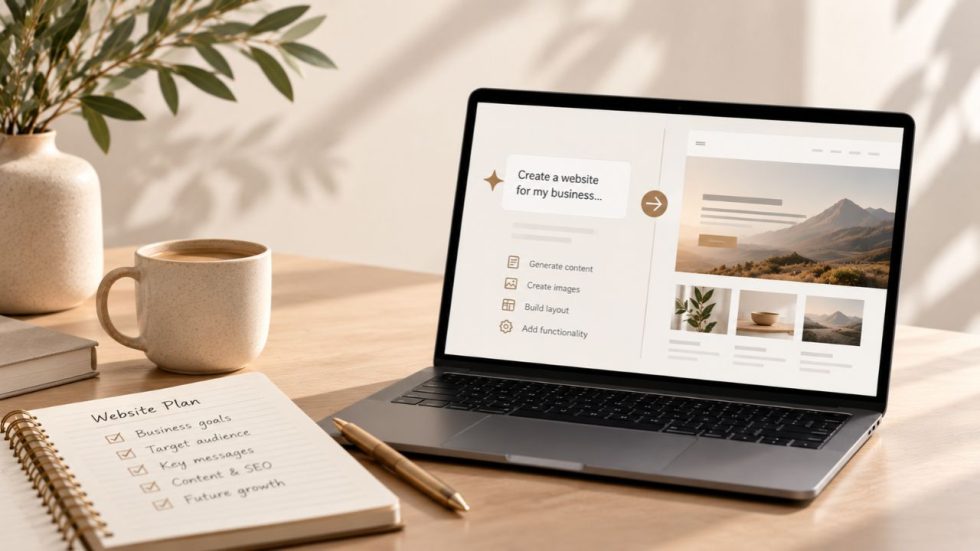
You have decided your business needs a new website.
Now you need to determine who should build it.
Do you need a web designer, a developer, a strategic website consultant, an agency, or someone who can launch the whole thing in a week?
There is no single right answer.
The best option depends on what has already been completed, what the website needs to accomplish, how much work your team can take on, and how much responsibility you want the provider to carry.
A one-week website and a full-scale strategic website project may both result in a new website, but they are not the same service. They require different levels of client involvement and solve different kinds of problems.
Before comparing prices, portfolios, or timelines, make sure you are comparing the right category of service.
Start with the problem you are trying to solve
If your brand, messaging, and content are already strong, you may simply need someone to turn those materials into a polished website.
If your business has evolved and the current website no longer reflects your services, positioning, or ideal client, you probably need more than visual design.
You may need help determining:
- What the website should communicate
- Which services should receive the most attention
- Who the website needs to attract
- How the company should be positioned
- What makes the business different
- What content needs to be written
- Which existing assets can be reused
- How visitors should move through the website
- Which functionality is required
- Which platform can support it
- How the complete project will be managed
The more of those questions that remain unanswered, the more strategic and collaborative your website engagement needs to be.
The main types of website service providers
Job titles are inconsistent in the website industry.
Two people may both call themselves web designers while offering very different services. One may focus entirely on visual design, another on technical development. Another may handle strategy, copy, design, development, and launch.
It is more useful to compare what each provider takes responsibility for.
1. DIY website builder or template
A DIY platform or premade template gives you the tools and structure to create the website yourself.
This may be right for you if:
- You are launching a new or very small business
- Your budget is limited
- The website is simple
- You have time to learn the platform
- You are comfortable making design and content decisions
- You understand what the website needs to say
- You do not need unusual or complex functionality
You will usually be responsible for:
- Strategy
- Positioning
- Copywriting
- Photography
- Asset organization
- Page structure
- Design customization
- Mobile layouts
- Search setup
- Forms and integrations
- Testing
- Launch
This is often the lowest financial investment, but it requires the greatest investment of your own time.
The platform gives you the tools. It does not necessarily determine what your website should say, how it should be organized, or what will make it effective.
2. Rapid-build or website-in-a-week service
A rapid-build service uses a tightly controlled process to launch a website within a few days or weeks.
The provider may adapt an existing template, work within a predefined page structure, or limit the number of revisions and custom features.
This may be right for you if:
- Your branding is complete
- Your website copy is finalized, and you already have a messaging strategy
- Your images and assets are organized
- You know exactly which pages you need
- The website has straightforward functionality
- You can provide fast feedback
- You are available to approve work immediately
- Speed is more important than exploration or customization
You may be expected to provide:
- Final, publication-ready copy
- A confirmed page list
- Professional photography already optimized for web
- Logo and brand files
- Testimonials
- Team information and bios
- Calls to action
- Form details
- Legal policies
- Search titles and descriptions
- All required logins
- Quick feedback and approvals
- All third-party integrations already set up and ready to plug in
“Publication ready” means the material should be final and ready to place directly onto the website. The provider is not expected to reorganize, rewrite, or substantially improve it.
A website can be built quickly when all the decisions and materials are ready.
If they are not ready, that preparation still needs to happen somewhere, and this may result in additional investment. The provider may not actually be completing the entire project faster. The strategy, copy, asset preparation, and coordination may simply have been transferred back to you.
That is not a problem. It simply needs to be clear before you commit.
3. Visual web designer
A visual web designer focuses primarily on how the website looks and feels.
They may be highly skilled in typography, layout, imagery, animation, and responsive presentation. Responsive presentation means making sure the website works visually across desktop computers, tablets, and phones.
Some visual designers customize templates. Others produce completely original page designs.
This may be right for you if:
- Your website strategy has already been established
- Your copy and content hierarchy are complete
- You have strong brand guidelines
- You need an elevated visual presentation
- Someone else is handling the development
- The website does not require complex functionality
Ask whether the service includes:
- Messaging guidance
- Page planning
- User-experience planning
- Mobile design
- Development
- Search setup
- Accessibility considerations
- Content migration
- Testing
- Technical launch support
A strong visual designer can create a beautiful website. The important question is whether visual design is the main problem you need to solve.
4. Website developer or technical freelancer
A developer focuses on building the website and making its functionality work.
They may specialize in WordPress, ecommerce, custom code, integrations, databases, directories, portals, or other technical systems.
An integration is simply a connection between the website and another system, such as a booking platform, email marketing service, customer database, or payment processor.
This may be right for you if:
- The strategy and design are already complete
- You have detailed technical requirements
- You need custom functionality
- Another professional is supplying the design
- You know exactly what needs to be built
- Your internal team can manage the project
You may still need separate support for:
- Brand positioning
- Website strategy
- Copywriting
- Content organization
- Visual design
- Photography
- Search strategy
- Project management
A developer may be excellent at executing a defined plan without being responsible for creating that plan.
This is why asking whether someone “builds websites” is not enough. You need to understand which parts of the project they actually own.
5. Full-service strategic website consultant
A strategic website consultant looks at the website as part of the larger business.
The work may include strategy, messaging, content direction, user experience, creative direction, development, project management, and launch.
User experience, often shortened to UX, refers to how easily someone can understand and use the website. It includes navigation, page structure, content order, calls to action, and the steps someone takes before contacting or buying from the business.
This may be right for you if:
- Your business has evolved
- Your positioning needs refinement
- Your services have changed
- Your website attracts the wrong enquiries
- Your content is fragmented or outdated
- You are unsure what should be retained
- You need help organizing assets and contributors
- The website requires custom functionality
- You want one person to lead the complete project
- You do not have an internal website team
This is the type of engagement I provide.
It requires collaboration from you, but you are not expected to arrive with every decision made and every asset ready for publication.
I help determine what is needed and manage the process of bringing it together.
6. Full-service agency
An agency usually provides a team of specialists. This may include strategists, account managers, project managers, copywriters, designers, developers, and search professionals.
This may be right for you if:
- The project is large or highly complex
- You need several specialists working simultaneously
- There are multiple internal stakeholders
- The website is part of a larger campaign or rebrand
- You require extensive research or content production
- Your budget can support a larger team and its overhead
An agency is not automatically more strategic or capable than an independent consultant. It simply has a different structure and may outsource freelance service providers on a white-label structure.
Likewise, a freelancer is not automatically junior, inexpensive, or limited to implementation. Independent professionals can offer anything from narrowly defined production support to senior-level strategic leadership.
Compare the scope, experience, and responsibility, not the label.
Website-service options at a glance
These are general patterns, not fixed pricing rules.
The investment will also depend on the provider’s experience, the complexity of the website, the amount of custom work involved, and the level of support included.
Choosing the right website platform
You may encounter designers who specialize in Wix, Squarespace, Showit, Webflow, Shopify, or WordPress.
Each platform can produce a professional website when it is matched to the right project and implemented well.
- Wix combines templates and visual editing with tools for services, bookings, ecommerce, and content management. It can work well for businesses that want common features contained within one managed platform.
- Squarespace combines templates, hosting, blogging, ecommerce, scheduling, and marketing tools. It can be a practical option for relatively straightforward service, portfolio, and small ecommerce websites.
- Showit emphasizes visual design freedom through a drag-and-drop builder. It offers separate control over desktop and mobile layouts, page-level search settings, and WordPress-powered blogging on applicable plans. It can suit visually led marketing websites with relatively straightforward functionality.
- Webflow combines visual development with a content management system, or CMS. A CMS is the part of a website that stores and organizes repeatable content such as articles, projects, team members, or resources. Webflow can work well for structured, design-led, and content-rich websites.
- Shopify is designed around ecommerce. It provides tools for products, payments, checkout, inventory, and online selling. It is generally a stronger starting point when selling products is the website’s primary purpose.
- WordPress provides substantial flexibility for content-heavy websites, custom content structures, integrations, and functionality that needs to evolve. It can support anything from a straightforward professional website to a more complex directory, resource library, property system, or membership platform.
None of these platforms is automatically good or bad.
The right choice depends on:
- The amount and type of content
- Required functionality
- E-commerce needs
- Third-party connections
- Search and visibility goals
- Editing requirements
- Accessibility expectations
- The technical comfort of your team
- Future growth plans
- The availability of ongoing support
A designer may naturally specialize in one or two preferred platforms. That is completely normal. They may have a technical stack they prefer.
The concern is when every client is directed toward the same platform before those requirements have been explored.
The platform should support the strategy, content, and functionality. The strategy, content, and functionality should not be reduced or reshaped simply to fit the provider’s preferred tool.
What working with me on a full-scale website project looks like
When you work with me on a full website project, I am not waiting for you to send me a folder of perfect assets so I can begin arranging pages.
My role is to understand what the business needs, identify what is missing, and guide the project from the initial strategy through launch.
1. Strategy and positioning
We begin by looking at the business before the design.
I need to understand:
- How the company has evolved
- Which services matter most
- Who you want to attract
- Which enquiries are no longer a good fit
- What differentiates your approach
- What potential clients need to understand
- What is and is not working on the current website
- What the next website should help you accomplish
This gives the project a clear foundation.
Without it, a website can look professional while presenting the wrong services, speaking to the wrong audience, or repeating generic claims that do little to differentiate the business.
Strategy is not an extra layer added to the design. It helps determine what should be designed in the first place.
2. Messaging and content direction
Most established businesses have plenty of information. It is simply not organized for a new website.
You may have brochures, proposals, presentations, social media posts, testimonials, existing web pages, and years of internal knowledge.
That is useful source material, but it is not yet a website content system.
I help:
- Clarify the core message
- Establish the order and priority of the content
- Create page-by-page copy direction
- Identify missing information
- Review and refine supplied copy
- Organize services and supporting evidence
- Determine where testimonials and case studies belong
- Develop useful FAQs
- Strengthen calls to action
- Coordinate with a copywriter when appropriate
Social media content can contribute ideas, but it usually cannot be pasted directly into a website.
A social caption supports one brief moment of engagement. Website content must help someone understand the business, compare services, find answers, develop trust and decide what to do next.
That requires more context, structure, and depth.
3. Asset collation
Asset collation means identifying, collecting, and organizing everything needed for the website.
This is one of the most underestimated parts of a website project.
Logos may exist in several versions. Team photographs may be outdated. Testimonials may be hidden in emails. Service descriptions may conflict across documents. Nobody may know which images are approved for use.
You are not expected to instinctively know everything the website will require.
I help identify, guide, and organize:
- Logos and brand files
- Fonts and color references
- Photography
- Team information
- Service details
- Testimonials and reviews
- Case studies
- Videos
- Awards and credentials
- Downloadable documents
- Forms
- Integration requirements
- Technical access
- Existing analytics and search information
We can then see what already exists, what needs improvement, and what still needs to be created.
4. Website architecture and user journeys
Website architecture is the way the pages and information are organized.
A user journey is the path someone takes through the website. For example, a visitor may enter through a blog article, move to a service page, review a case study, and then schedule a consultation.
I determine:
- The page structure
- Primary and secondary navigation
- Service-page hierarchy
- Relationships between pages
- Paths for different audiences
- Internal links
- Calls to action
- Search-focused content opportunities
- The journey from initial interest to enquiry
The structure should reflect your current business priorities, not simply recreate the old website with a new design.
5. Creative direction
Creative direction connects the visual presentation to the positioning of the business.
It is more than choosing colors and fonts.
I consider:
- How established, approachable, or specialized the company should feel
- What the ideal client expects to see
- How the business should differ from competitors
- Which imagery supports the message
- How typography affects tone and readability
- Where restraint is more effective than decoration
- Whether the existing brand is strong enough
- How the visual system will remain consistent and perform
A website can be visually impressive and still communicate the wrong thing.
Creative direction ensures the design decisions support the business, audience, and message.
6. WordPress design and development
Once the foundation is established, I design and build the website in WordPress.
Depending on the project, this may include:
- Responsive page layouts
- Reusable design components
- Global typography and color systems
- Service and landing pages
- Blog and resource templates
- Forms and integrations
- Search titles and descriptions
- Image optimization
- Redirect planning
- Analytics and tracking
- Content management structures
- Accessibility-conscious implementation
A redirect automatically sends someone from an old page address to the correct new page. Redirects are important during a redesign because they help prevent broken links and protect existing search visibility.
WordPress allows me to build around the needs of the business and expand the website as those needs evolve.
7. Custom elements and functionality
Some businesses need more than standard marketing pages.
Custom requirements may include:
- Dynamic directories
- Property or project listings
- Advanced filters
- Interactive maps
- Resource libraries
- Event systems
- Location templates
- Custom content types
- Conditional forms
- Membership content
- Third-party integrations
- Specialized mobile experiences
“Dynamic” means that the content is stored once and automatically displayed in different places. For example, a property added to the website could automatically appear in the correct location, category, and search results without rebuilding each page manually.
These requirements should be identified before the platform and project scope are finalized.
8. Full project management
A website project involves more coordination than most clients expect.
Someone needs to track:
- Content
- Assets
- Website and third-party platform access
- Feedback
- Revisions
- Approvals
- Integrations
- Dependencies
- Contributors
- Technical issues
- Hosting and launch requirements
I manage those moving parts throughout the project.
You still contribute your knowledge and approve important decisions, but you should not need to become the website strategist, content manager, creative director, developer, and technical project lead yourself.
9. Quality assurance and launch
A website is not ready simply because the pages look finished.
Before launch, I review:
- Desktop, tablet, and mobile layouts
- Navigation
- Links
- Forms and notifications
- Calls to action
- Content formatting
- Search settings
- Images and media
- Integrations
- Browser behavior
- Redirects
- Analytics
- Backups
- Launch requirements
I also help manage the technical launch.
This can involve the domain, hosting, SSL certificate, caching, and DNS.
In plain terms:
- The domain is the website address.
- Hosting is the server where the website files live.
- An SSL certificate creates the secure connection shown by
https. - Caching helps pages load faster by storing ready-to-display versions.
- DNS connects the domain to the correct website and email services.
These details can affect whether the website launches smoothly and whether other systems, including business email, continue working correctly.
10. Support after launch
A website should continue evolving after it goes live.
Services change. New questions emerge. Search behavior develops. Content needs to be added. Technology must be maintained.
Ongoing support may include:
- WordPress updates
- Security monitoring
- Backups
- Performance checks
- Content updates
- New landing pages
- Search improvements
- Functionality enhancements
- Strategic recommendations
Launch is an important milestone, but it is not the end of the website’s useful life.
What I need from you
Full service does not mean you disappear until the website is ready.
Your involvement remains essential because you understand the business better than anyone else.
I need you to:
- Share your knowledge and goals
- Provide access to existing materials
- Identify key decision-makers
- Answer questions about services and clients
- Review recommendations
- Supply specialist or regulated information
- Provide timely feedback
- Approve messaging, design, and functionality
- Make final business decisions
The difference is that I guide the process, identify what is needed, and translate your knowledge into the website.
You provide expertise about your business. I provide the strategic, creative, and technical expertise required to turn it into an effective digital experience.
Red flags when comparing website proposals
A launch date is promised before the project is understood
A short timeline may be realistic for a tightly defined website with finished content.
It is a concern when the provider has not reviewed the current website, required pages, content, integrations, technical environment, or functionality.
Ask what assumptions the timeline is based on and what could cause it to change.
Everything must be supplied “publication ready”
This usually means content strategy, editing, asset organization, and coordination are outside the scope.
Ask exactly what must be supplied, who will determine what is needed, and what happens if your materials are incomplete.
The platform is chosen before discovery
Wix, Squarespace, Showit, Webflow, Shopify, and WordPress can all be appropriate in the right circumstances.
Be cautious when a provider recommends a platform before understanding:
- What the website must accomplish
- How much content it will contain
- Which functionality is required
- How the business expects to grow
- Who will maintain the website
- What needs to connect with it
- Whether ecommerce, directories, resources, custom elements, or gated content are involved
The tool should fit the project. The project should not be reduced to fit the tool.
Built-in features are treated as a complete strategy
Most modern platforms provide templates, search settings, mobile tools, forms, analytics, and integrations.
Having access to those features does not mean they will automatically be used effectively.
Someone still needs to decide what the website should say, how it should be organized, which pages matter most, and how visitors should move through it.
A platform can make implementation faster. It cannot independently determine the right website strategy for an established business.
The process begins and ends with visual preferences
Colors, fonts, and inspiration are important, but they should not be the only discovery questions.
The provider should also understand your audience, services, positioning, priorities, and business goals.
Social media content is treated as finished website copy
Social media professionals can be valuable contributors, but social captions and website content perform different jobs.
Ask who will turn your existing marketing material into clear page messaging, service explanations, supporting evidence, FAQs, and conversion pathways.
You are expected to coordinate all the specialists
Several experts may contribute to a strong project. The concern is whether anyone owns the complete website and ensures the strategy, copy, design, development, and launch remain aligned.
If nobody is responsible for the full picture, that responsibility usually falls back on you.
Search optimization consists only of adding keywords
Search engine optimization, commonly called SEO, is the process of helping search engines understand and recommend your website.
Keywords are only one part of it.
Search visibility also depends on:
- Clear website structure
- Useful and relevant content
- Internal links
- Descriptive page titles
- Mobile usability
- Appropriate technical setup
- Page performance
- Language that clearly explains the business
The same clarity also helps AI-powered search tools understand your company and use your content when answering questions.
Custom functionality is discussed after the price is agreed
Directories, filtering, ecommerce, integrations, portals, and membership features can materially affect the project scope.
These requirements should be identified before the price, timeline, and platform are finalized.
Launch support is unclear
Ask who manages forms, redirects, analytics, domain settings, mobile testing, browser testing, and post-launch issues.
Publishing the pages is only one part of launching a website safely.
The relationship ends immediately after launch
Ask what happens if a form fails, a plugin needs attention, content must be updated, or a new requirement emerges.
Even if ongoing support is a separate service, you should understand what is available before the website launches.
Why the cheapest proposal may require the most work from you
A smaller invoice does not always mean a lower total cost.
You may still need to pay separately for:
- Brand strategy
- Messaging
- Copywriting
- Photography
- Search support
- Development
- Integrations
- Asset preparation
- Project management
- Content migration
- Post-launch support
Content migration means moving existing pages, articles, images, or other information from the old website into the new one.
Your internal time also has value.
If you spend weeks preparing publication-ready content, finding assets, coordinating contributors, resolving conflicting advice, and managing technical requirements, that work remains part of the website investment even if it does not appear on the provider’s invoice.
Likewise, a higher-priced rapid service may charge a premium for concentrated availability and speed without taking responsibility for the strategic and content work that must happen before the build.
Ask what the price includes, what it excludes, and what your team must complete before the project can begin.
How to choose the right website service
Choose DIY or a template if:
Your requirements are simple, your budget is limited, and you are comfortable doing most of the work yourself.
Choose a rapid-build service if:
Your strategy, copy, assets, and page structure are complete, and you value a short, tightly managed implementation timeline.
Choose a visual designer if:
Your strategic foundation is ready, and your primary need is a more polished, distinctive visual experience.
Choose a developer if:
The design and technical requirements are already defined, and you need someone to implement them correctly.
Choose a strategic website consultant if:
Your business has evolved, important decisions still need to be made, and you want one senior professional to guide and execute the project from strategy through launch.
Choose an agency if:
The project requires a larger multidisciplinary team, substantial simultaneous production, or coordination across a complex organization.
Questions to ask before hiring a website designer or developer
- Which parts of the website process do you handle?
- Is strategy included?
- Who determines the page structure and user journey?
- Do you provide messaging or copy guidance?
- What content and assets must I supply?
- Do those materials need to be publication-ready?
- Who manages the project and coordinates contributors?
- How is the website platform selected?
- What functionality is included?
- Is the design custom or based on an existing template?
- How many revision rounds are included?
- How are mobile layouts handled?
- What search setup is included?
- How will existing rankings and page addresses be protected?
- What testing takes place before launch?
- Who manages the technical launch?
- What happens if the scope changes?
- What support is available after launch?
You should be able to understand the answers before signing the proposal.
Choose based on what you actually need
The right website service is not necessarily the fastest, the cheapest, or the one with the largest team.
It is the service that matches the condition of your business and the amount of support you require.
If everything is ready and you simply need someone to assemble it, paying for an extensive strategic process may be unnecessary.
If your business has evolved, your positioning is unclear, your content is fragmented, and your website needs to support more complex goals, a rapid implementation service may leave the most important work unresolved.
A full-scale website project with me brings together:
- Strategic website consulting
- Messaging and content direction
- Asset collation
- Website architecture
- User-experience planning
- Creative direction
- WordPress design and development
- Custom functionality
- Full project management
- Quality assurance
- Technical launch support
- Ongoing website care and improvement
You bring your knowledge of the business.
I lead the process of turning it into a clear, cohesive, and purposeful website.
Frequently Asked Questions About Choosing a Website Designer
What type of website designer do I need?
The right type of website designer depends on how much of the project has already been completed. If your strategy, copy, assets, and page structure are ready, a visual designer or rapid-build service may be sufficient. If those elements still need to be clarified, look for a strategic website consultant or full-service provider who can guide the project before beginning the design.
What is the difference between a web designer and a web developer?
A web designer generally focuses on the website’s layout, visual system, and user experience. A web developer builds the technical website and implements its functionality. Some professionals provide both services, while others specialize in one area. Ask which parts of the process are included rather than relying on the job title alone.
Should I hire a freelancer or a web design agency?
Hire according to scope, experience, and responsibility rather than the label. A senior independent consultant may provide strategy, design, development, and project leadership directly. An agency may provide access to a larger team and broader production capacity. The better option depends on the project’s complexity, your preferred working relationship, and your budget.
How involved will I need to be in my website project?
Every website project requires client involvement. You will need to share information, provide access, review recommendations, and approve important decisions. In a full-service engagement, the provider guides and manages the process. In a rapid-build or implementation-only service, you may need to prepare most content and assets before work begins.
What do I need to provide to a website designer?
Most website designers need information about your business, services, audience, goals, and existing website. They may also request brand files, copy, photography, testimonials, team information, legal policies, and technical access. The important distinction is whether the designer helps identify and organize these materials or expects everything to be delivered in publication-ready form.
Is a rapid build service legitimate?
Yes. A website-in-a-week service can be legitimate when the project is tightly defined, and the client’s strategy, copy, assets, and approvals are ready. It may not be the right fit when the business needs positioning, messaging, content development, custom functionality, or broader strategic guidance.
Why do full-service website projects cost more?
Full-service projects include more than visual design and page assembly. The investment may cover strategy, messaging, content planning, asset coordination, user experience, development, custom functionality, project management, testing, and launch. The provider assumes more responsibility and reduces the amount of specialized work the client must manage separately.
How should I compare website design proposals?
Compare the scope, responsibilities, and deliverables rather than looking only at the price or timeline. Identify what each provider will handle, what you must supply, whether the design is custom, which functionality is included, and who is responsible for content, search setup, testing, launch, and post-launch support. Make sure you have a clear outline of the scope and what you can expect during the process.
Is one website platform better than all the others?
No single platform is best for every business. Wix, Squarespace, and Showit may suit relatively straightforward marketing websites. Shopify is designed specifically for ecommerce. Webflow and WordPress can support more structured, content-rich, or customized websites, depending on how they are implemented. The right platform should be selected according to the website’s content, functionality, integrations, maintenance requirements, and plans.
Is it a red flag if a designer only works with one website platform?
Not necessarily. Specialization can make a designer faster and more knowledgeable within that platform. It becomes a concern when the platform is recommended without confirming that it can support your requirements. Ask why it is appropriate for your business and whether any functionality will depend on workarounds or additional services.
Should I choose the website platform before hiring a designer?
Usually, it is better to clarify the website’s requirements first. Choosing a platform too early can limit your options or encourage you to design the project around the tool. A strategic website consultant, designer, or developer should be able to explain which platform is appropriate and what trade-offs are involved.
Do I need a website strategist as well as a designer?
You may need strategic support if your business has changed, your positioning is unclear, your services are difficult to organize or you are unsure what the website should communicate. A strategic website consultant can define the foundation before or alongside the design, reducing the risk of building an attractive website around the wrong message or structure.
Not sure which type of website support you need?
Before comparing more proposals or committing to a platform, get clear on what your website and business actually require.
A Website Clarity Session gives you an experienced, strategic perspective on your current website, positioning, content, functionality, and priorities. Together, we’ll determine whether you need a focused refresh, a structural improvement, specialized technical support or a full-scale website redesign.
You’ll leave with a clearer understanding of what to invest in, which type of provider you need, and what should happen next.
Book a Website Clarity Session
Already know you need a strategic, full-service WordPress website? Reach out to book a Discovery Call